Iyengar Yoga has its roots in an ancient tradition of yoga, passed from teacher to student and developed through dedicated practice and study.
B.K.S. Iyengar (1918–2014) studied yoga with his teacher, T. Krishnamacharya, in India. Through more than 75 years of practice and teaching, he developed a profound understanding of the yoga asanas (postures) and pranayama (breath control), making yoga accessible to people of different ages, abilities and circumstances.
His teaching became known throughout the world for its precision, clarity and attention to alignment. The thoughtful use of supports and props also enabled students to experience the benefits of poses that might otherwise have been inaccessible to them.
B.K.S. Iyengar worked closely with his daughter, Geeta S. Iyengar, and his son, Prashant S. Iyengar, who each made significant contributions to the development and understanding of the subject. Today, his granddaughter Abhijata Sridhar Iyengar continues this tradition of teaching and study at the Ramamani Iyengar Memorial Yoga Institute (RIMYI) in Pune, India.
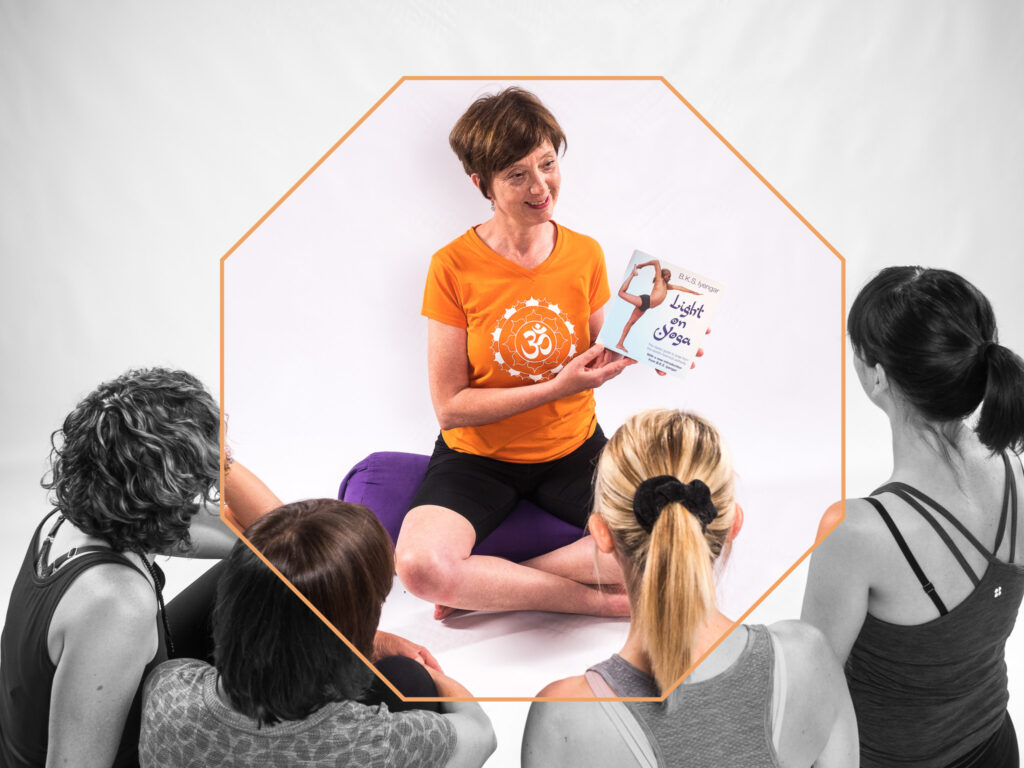
Iyengar Yoga teachers around the world are part of this continuing lineage. Teachers undertake rigorous training and assessment and continue their professional development through regular practice, study and learning from more experienced teachers.
At Leeds Bradford Iyengar Yoga, we are proud to be part of this tradition and to support the study and practice of Iyengar Yoga across our local community.
Iyengar Yoga is not simply a particular way of performing yoga postures. It is a method of learning through the body, developing awareness, stability, sensitivity and understanding over time.
The teaching continues to evolve through practice and enquiry while remaining firmly rooted in the principles established by B.K.S. Iyengar and the wider tradition of yoga.